Why Teeth Crack Even When You Take Perfect Care of Them
Every few weeks I see a patient in my chair who is confused and a little frustrated. They come in because a tooth broke, and when they find out what is needed to fix it, the first thing they say is something like: but I do everything right. I come in every six months. I brush and floss. I have not had a cavity in years. How did this happen?
It is a fair question and it deserves a real answer, because in most cases the patient is telling the truth. Their hygiene is excellent. Their oral health is well maintained. And yet the tooth still cracked.
Here is what is actually going on.
The silver filling problem
If you have older silver amalgam fillings in your back teeth, you have the most common underlying cause of cracked molars sitting right in your mouth. Not because the fillings are failing or because they were placed poorly, but because of a basic fact of materials science that plays out over decades.
Metal expands when it heats up and contracts when it cools down. Your teeth do the same. But the rate at which silver amalgam expands and contracts is different from the rate at which natural tooth enamel and dentin do. Every time you drink a hot cup of coffee and then take a sip of ice water, those two materials are moving at slightly different rates, creating internal stress at the interface between the filling and the tooth. Do this thousands of times over twenty years and what you get is micro-cracks propagating through the tooth structure surrounding the filling.
This is not a process you can see happening and it is not one you can prevent by changing your habits. It is simply physics playing out over time. The filling is doing exactly what it is supposed to do, and so is the tooth, but the cumulative stress of that motion over years eventually causes the tooth to crack from the inside out.
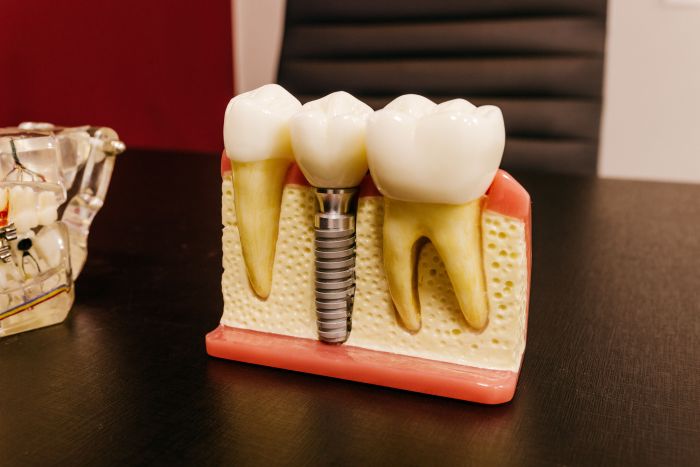
When this happens, the structural integrity of the tooth is compromised. The most common treatment at that point is a crown, which holds the tooth together and distributes the forces of chewing across the whole crown rather than concentrating them at the crack site. In some cases we can catch this before the crack propagates far enough to cause symptoms. In others, the first sign is a tooth that breaks off.
I want to be clear: we do not recommend replacing silver fillings just because they are silver. But when a tooth with an old large amalgam filling starts showing signs of cracking, or when the filling itself is breaking down, a crown at that stage is a protective measure rather than a cosmetic one.
The grinding factor
Grinding and clenching teeth during sleep compounds this process considerably. If a tooth with an old silver filling is already under internal stress from years of thermal cycling, adding the mechanical forces of nighttime grinding to that picture accelerates the timeline.
I think about teeth the way a mechanic might think about car tires. How long does a set of tires last? It depends on how much you drive, how fast, whether you brake hard or take corners aggressively, and whether you stay on smooth roads or take the car off-road. A tire that might last sixty thousand miles under normal use might wear out in thirty thousand under harder use. And any tire, no matter how well maintained, can get a flat from a nail in the road.
Teeth are the same. The amount of force applied to them over their lifetime determines how long they hold up. A person who grinds heavily at night is applying far more force to their teeth than the same person sleeping quietly. Over years, that extra wear shows up as cracked fillings, fractured cusps, worn enamel, and eventually broken teeth.
A nightguard does not prevent the thermal cycling issue with silver fillings. It also cannot protect against traumatic events like the occasional bite on a chicken bone, an olive pit, or a fork that connects with the wrong tooth at the wrong angle. Those things happen regardless. What a nightguard does is reduce the ongoing mechanical loading that grinding adds to teeth that are already under cumulative stress. It extends the life of existing dental work and slows the rate at which wear accumulates. Think of it as the smooth, well-maintained road for your tires.
What you can do
If you have large silver fillings in your back teeth that have been there for fifteen or twenty years, it is worth having a conversation with your doctor about the current state of those teeth. Not every old amalgam needs to be replaced or crowned immediately. But monitoring them closely and discussing the risk picture is reasonable.
If you grind or clench your teeth, a custom nightguard is the most effective tool we have for reducing the mechanical wear on your teeth and the dental work inside them. It will not make you immune to cracks. Nothing will. But it will reduce the rate at which the cumulative damage accumulates, which is what determines how long your dental work lasts.
And if you have already had a tooth crack, please do not wait. The longer a cracked tooth is left without treatment, the further the crack tends to propagate and the more complex the repair becomes. What is a crown today might be a root canal and crown next year, and in the worst cases the tooth can fracture below the gumline and need to be extracted.
We are happy to evaluate any tooth that is bothering you or that you are concerned about. Call us at (704) 323-7577 or visit minthillsmiles.dentist to schedule. We are at 11300 Cresthill Drive, Suite 105, Mint Hill, NC 28227.