Tooth Extractions At Mint Hill Smiles - Bone Grafting & PRF in Mint Hill, NC

Tooth Extractions · Mint Hill, NC

Nobody comes to us hoping for an extraction.

By the time a tooth needs to come out, most patients have been through the ringer. Whether it’s a tooth that was hurting for weeks, a crack that could not be saved, or decay that had gone too far, a tooth that needs to be removed is usually uncomfortable. When we recommend an extraction, it is because we have looked at every other option first and the tooth cannot be saved in a way that serves you well long term.

What we want to do on this page is walk you through what an extraction actually looks like at Mint Hill Smiles, talk about what happens to the bone after a tooth comes out and why that matters more than most patients realize, and help you think through what comes next, whether that is simply letting the site heal or exploring options to replace the tooth. Both paths are valid and we will support you through either one.

The Reality

Why a Tooth Sometimes Cannot Be Saved

A tooth that needs to be extracted has usually reached a point where the remaining structure cannot support a restoration that will hold up and function the way a tooth should. This happens for several reasons.

In some cases, wisdom teeth are removed for reasons that are not about disease but because they are coming in at an odd angle and will cause damage to other teeth. 

Whatever brought you here, we want you to know that we take the decision to remove a tooth seriously. A natural tooth is always worth saving when it can be saved and when it makes sense to save it in the context of the entire plan for your mouth. When it is not, we will explain clearly why, what the extraction involves, and what your options are from that point forward.
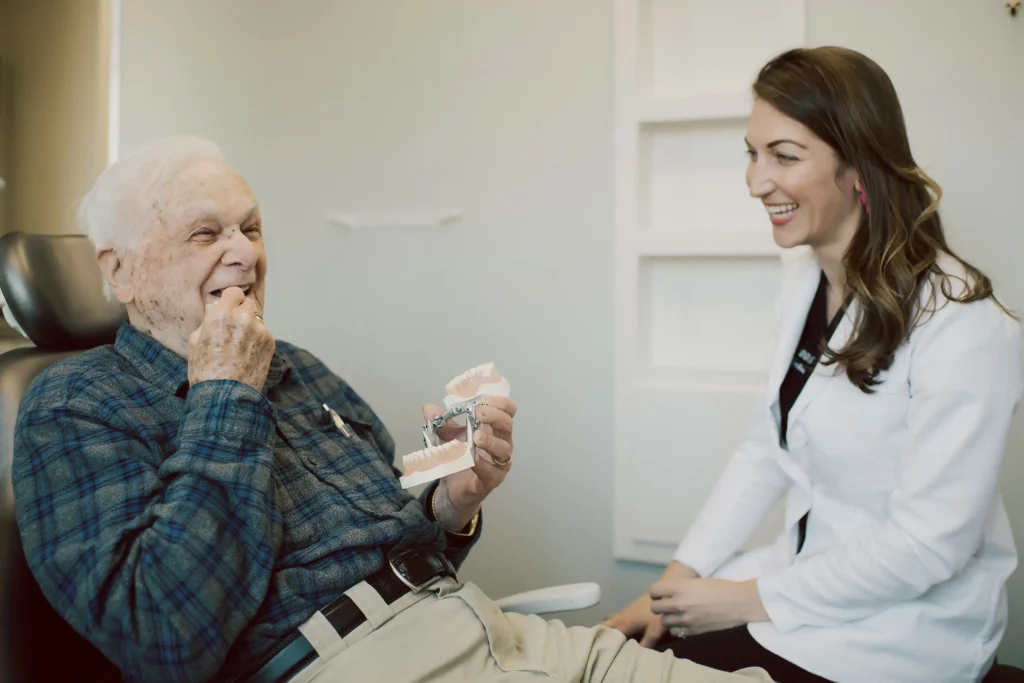
Gentle Stress-Free Care

What Your Extraction Appointment Looks Like at Mint Hill Smiles

Most patients are surprised by how straightforward an extraction appointment is when it is approached carefully and with proper anesthetic. We use our CBCT cone beam imaging to evaluate the tooth and the surrounding bone before the appointment so we have a complete three-dimensional picture of exactly what we are working with. There are no surprises for us going in, which means fewer surprises for you.

We numb the area completely before we do anything. We give the anesthetic time to work and we confirm you are fully comfortable before we proceed. You will feel pressure during an extraction, the sensation of the tooth being loosened and removed, but that pressure is not pain. If at any point something feels sharp or wrong, you raise your hand and we stop. That is the same standard we hold across every procedure we do.

Depending on the position and condition of the tooth, some extractions are simple and take only a few minutes once the area is numb. Others involve a tooth that is broken at the gumline, impacted, or positioned in a way that requires a more careful surgical approach. 

Bone Grafting

The Conversation Most Patients Do Not Know to Have

This is the part of the extraction conversation that we consider one of the most important things we can tell a patient, regardless of whether they plan to replace the tooth or not.

When a tooth is removed, the bone that surrounded and supported it begins to resorb. This is a natural biological process. The body is essentially recognizing that the bone no longer has a job to do in that location and starts to break it down. In the first year after an extraction, significant bone volume can be lost at the site. Over time, that bone loss can affect the shape of your jaw, the way neighboring teeth sit, and the way your face looks from the outside. It can also make future treatment, including implant placement, more complex and costly if you decide years later that you do want to replace the tooth.

A bone graft placed at the time of extraction changes this picture significantly. We place a biocompatible grafting material into the socket immediately after the tooth is removed. This material acts as a scaffold that supports new bone growth and preserves the volume of the ridge while the site heals. It does not add significant time to your appointment and it sets the stage for a much better outcome regardless of what you decide to do with that space going forward.

We recommend bone grafting at the time of extraction for most patients in most situations. The cost is a fraction of what it takes to rebuild bone later if you decide to pursue an implant, and even for patients who have no plans to replace the tooth, preserving the bone protects the health and structure of the surrounding teeth over time.

PRF

Using Your Own Biology to Heal Faster

PRF stands for Platelet Rich Fibrin, and it is one of the more remarkable things we offer at Mint Hill Smiles for patients undergoing extractions and other surgical procedures.

Here is how it works. Before your extraction appointment, we draw a small amount of your blood which is the same process as a routine blood draw. We spin it in a centrifuge that separates it into layers, and from that process we create a concentrated material rich in platelets, growth factors, and fibrin from your own blood. That material is placed into the extraction socket at the time of the procedure.

The benefit is faster and more predictable healing. PRF releases growth factors that accelerate tissue regeneration, reduce inflammation, and significantly lower the risk of a painful complication called dry socket, where the blood clot that is supposed to protect the healing socket becomes dislodged or dissolves before the tissue has closed over. Dry socket is one of the more uncomfortable things that can follow an extraction, and PRF is one of the most effective tools we have for preventing it.

PRF is also entirely natural. We are not introducing a foreign substance. We are concentrating and returning your own biology to a site that needs support. For patients who want the smoothest possible healing process, it is an option we feel good about recommending.

If You Are Not Planning to Replace the Tooth

Some patients know immediately that replacing the extracted tooth is not something they want to pursue right now. That is a completely understandable position and we are not going to push you toward treatment you are not interested in.

What we do want you to have is honest information so your decision is fully informed. When a tooth is lost and not replaced, the neighboring teeth on either side and the tooth above or below the space can begin to shift over time. This happens gradually and is not always noticeable in the short term, but over years it can affect your bite, create new spaces where food traps, and make future treatment more involved. The bone at the site will also resorb as we described above, which can affect the contour of your jaw over time.

None of this means you have to do anything. It means you deserve to know the full picture before you decide. We will give you that picture honestly at your appointment and then support whatever decision you make.

If You Do Want to Replace the Tooth

For patients who want to close the space, there are several options worth knowing about and we are happy to walk you through each one in detail at your appointment.

A dental implant is the closest thing to a natural tooth that modern dentistry can offer. A titanium post replaces the root of the tooth, it integrates with the bone over a four month healing period, and then a custom crown is attached on top. An implant functions and feels like a natural tooth, it preserves the bone at the site, and with proper care it can last a very long time. The bone grafting we do at the time of extraction is what sets up the implant site for success if you decide to go that route.

A bridge is another option for replacing a single missing tooth, particularly when the neighboring teeth already have crowns or significant restorations. A bridge uses the teeth on either side of the space as anchors for a prosthetic tooth in the middle. It is a fixed restoration, which means it does not come in and out, and it is often a good solution when implant placement is not the right fit.

For patients missing multiple teeth, a partial denture may also be worth discussing. We cover this in more detail on our dentures page, but the short version is that modern partial dentures are considerably more comfortable and natural looking than the options patients remember from a generation ago.

We are glad to talk through all of these options without any pressure. Understanding what is available is not a commitment to anything.

After Your Extraction

What Helps You Heal

We send every patient home with detailed post-operative instructions and we are always available by phone if something does not feel right. Here are the key things that make the biggest difference in healing well.

Bite firmly on the gauze we place for 30 to 45 minutes after your appointment. A blood clot forming in the socket is the foundation of healthy healing and the gauze pressure is what helps that happen. If bleeding continues, replace the gauze and bite down again for another 30 minutes. A tea bag pressed firmly against the site also works in a pinch.

Apply ice to the outside of your face for the first 24 hours — 20 minutes on, 20 minutes off — to minimize swelling. After the first 24 hours, switch to warm moist heat.

For pain management, we recommend 600mg of ibuprofen every six hours for the first three days, starting before the numbness wears off. Alternating with 500mg of extra strength Tylenol can help if ibuprofen alone is not enough. Avoid aspirin, which can increase bleeding.

Do not smoke, use a straw, or rinse vigorously for one week. These activities can dislodge the clot and lead to dry socket, which is painful and sets healing back significantly.

Eat soft, cool foods for the first day such as yogurt, applesauce, mashed potatoes, and ice cream. Avoid anything hard, crunchy, or small enough to lodge in the socket. Drink plenty of fluids and stay hydrated.

Starting the day after your extraction, rinse gently with warm salt water after meals to keep the site clean. Continue brushing the rest of your teeth normally.

Most patients feel well enough to resume normal activities within a few days. If you experience heavy bleeding, severe pain, or swelling that is getting worse rather than better after the third day, call us right away.

FAQ

Frequently Asked Questions About Extractions

With proper anesthetic, the extraction itself should not be painful. You will feel significant pressure as the tooth is being loosened and removed, which some patients find intense even though it is not pain. The area will be sore for a few days after the appointment and mild to moderate discomfort is normal during that window. Most patients manage well with ibuprofen and feel considerably better by day three.
A simple extraction can take as little as 10 to 20 minutes once the area is numb. A surgical extraction involving an impacted tooth or a tooth that has broken at the gumline will take longer, typically 45 minutes to an hour.
We recommend bone grafting for most patients because it preserves the bone volume at the site regardless of what you plan to do in that space. It is a much simpler and less expensive process at the time of extraction than rebuilding lost bone later. We will discuss your specific situation with you and explain our recommendation clearly before your appointment.
PRF uses concentrated material from your own blood to accelerate healing and reduce the risk of complications like dry socket. It is not mandatory but for patients who want faster healing and lower risk of post-operative complications, it is an option we feel confident recommending. We will explain the process and the cost before you decide.
Yes you should eat normally before a routine extraction appointment because you will be numb afterwards and chewing while numb increases the risk of biting your lip or tongue. We will give you specific pre-appointment instructions based on what your procedure involves.

Ready to Take Care of It?

If you have a tooth that needs to come out, the sooner we take care of it the better your options are. We make same day appointments available for patients who are in pain and we will work to get you seen quickly.

Call us at (704) 323-7577 or visit minthillsmiles.dentist to schedule. We are at 11300 Cresthill Drive, Suite 105, Mint Hill, NC 28227. We serve patients from Mint Hill, Matthews, Indian Trail, Stallings, Weddington, Midland, Albemarle, and southeast Charlotte, NC, and we accept most major insurance plans including Delta Dental, Aetna, Cigna, Blue Cross Blue Shield, and United Healthcare. If you do not have insurance, our Brush365 membership plan includes a 15% discount on all surgical treatment.

We will take good care of you from the day you come in through every step of healing and whatever comes next.