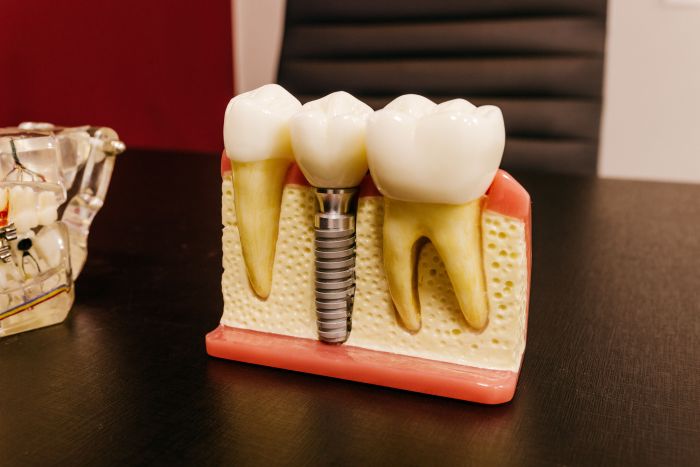
No. Not crowns, not veneers, not white fillings.
Whitening gel works by breaking down stain molecules inside natural tooth enamel and the layer under it. Porcelain and composite resin don’t have that structure, so the gel has nothing to act on. The natural teeth around them get lighter. The dental work stays exactly the shade it was made.
That one fact explains a surprising number of the cosmetic results people are unhappy with.
What it looks like when this goes wrong
The common version goes like this. Someone has a crown on a front tooth that was matched to their teeth ten years ago. Since then their natural teeth have darkened a little, which happens to everyone, and the crown now looks slightly too bright. Or it was always slightly off.
They decide to whiten. The natural teeth brighten nicely. The crown doesn’t move. Now it looks darker than everything around it, and the mismatch is worse than before they started.
The same thing happens with veneers placed before whitening, and with white fillings on the front teeth. A filling that blended in perfectly can show up as a darker patch once the tooth around it lightens.
So what do you do if you already have dental work
You whiten anyway, if you want to, but you plan for what happens next.
If the dental work is on a back tooth, it usually doesn’t matter. Nobody sees the color of a molar crown.
If it’s a small white filling on a front tooth, it’s usually simple. Whiten first, let the shade settle for about two weeks, then replace the filling to match. It’s a short appointment.
If it’s a crown or veneer on a front tooth, you’ve got a choice. Whiten the natural teeth to match the existing work, if it’s already brighter than they are, and stop there. Or whiten to the shade you actually want and then replace the crown or veneer to match. The second option costs more, so it’s worth deciding before you start. Replacing an old crown to match a whitened smile is a common part of that plan.
The order that avoids the problem
If you’re planning any cosmetic work at all, whitening comes first. Every time.
- Any decay, gum problems or failing fillings get treated.
- Teeth get straightened, if that’s part of the plan.
- The natural teeth are whitened and the shade is left to settle.
- Crowns, veneers and bonding are made to match that shade.
This is the main reason we prefer planning the whole smile at once rather than fixing one tooth at a time as things come up. When each piece is done separately, by different people, over years, nothing is ever matched to the finished shade because nobody decided what the finished shade was.
Why whitening over decay is a bad idea
There’s a second reason we check teeth before handing anyone whitening trays.
Not every dark spot is a stain. Decay shows up as dark or chalky patches, and bleaching gel over active decay doesn’t fix the color. It gets into weakened tooth structure and can cause real sensitivity. Gum disease is similar: gel on inflamed gum tissue can irritate it badly.
So the order is exam first, then whitening. A dark spot from decay needs a filling, not bleach.
Getting the whitening part right
We do teeth whitening at home with custom trays made from a digital scan, rather than in the chair. Chairside gel is much stronger, and for a lot of people that means days of sharp sensitivity for a result you can reach at home over a week or two without it.
Home whitening also lets you stop at the shade you want. That matters when the goal is to match existing work rather than to go as bright as possible. You can whiten for a week, look, and decide.
Most people see a clear change within one to two weeks of wearing the trays for around 30 minutes a night.
What about “whitening” toothpaste and strips
They work on natural enamel too, just more slowly and less evenly than a fitted tray. They won’t touch crowns or veneers either.
The other issue with strips is fit. They sit flat across teeth that aren’t flat, so they often whiten the middle of each tooth more than the edges. On teeth with dental work, that can make a mismatch more obvious, not less.
If your veneers or crown have yellowed
Porcelain itself barely stains. When a porcelain crown or veneer looks dull or yellow after years, it’s usually surface staining on the glaze, or the edge where it meets the tooth. A professional cleaning and polish often fixes that. If the margin has darkened or the gum has pulled back from it, the restoration may need replacing, and that’s the time to match it to a freshly whitened shade.
Composite bonding is different. It does pick up stain over time, and it can be polished or refreshed rather than replaced.
The American Dental Association has more on whitening safety and what to expect if you want to read further.
If you have crowns, veneers or fillings on your front teeth and you’re thinking about whitening, call (704) 323-7577. We’ll tell you what will and won’t change before you start.