The parents who are most on the fence about airway treatment are usually the ones who have already noticed something. Their child snores regularly, they breathe through their mouth, they are restless sleepers, and the pediatrician mentioned something about their tonsils, but the concern has not risen to the level of urgency and the uncertainty about whether treatment is actually necessary has kept them from taking the next step.
If that describes you, this post is for you.
The question I always ask first
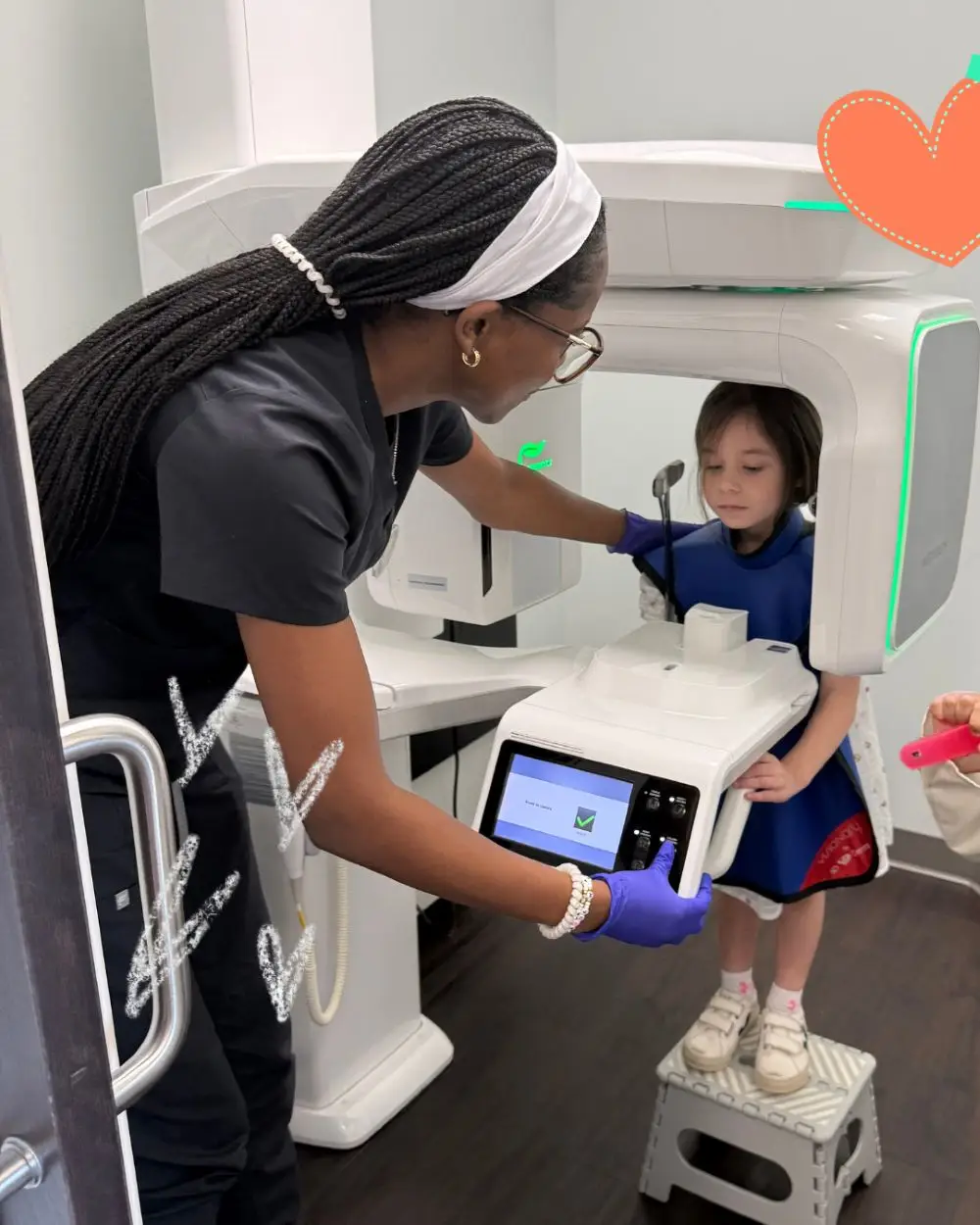
When a parent tells me they are not sure whether their child needs airway treatment, the first thing I say is: let us do an evaluation and talk about what we are seeing.
Not because I expect to find a problem that requires immediate treatment in every child I evaluate. I do not. Plenty of children come through our Sleep Better Charlotte consultations and the picture is either reassuring or warrants monitoring rather than active intervention. But the evaluation gives us actual information rather than an educated guess, and actual information is always better than a wait-and-see posture based on not wanting to overtreat.
The alternative to evaluating is watching a child continue to do what they are doing, which may be fine or may not be but you will not know without looking. An evaluation is not a commitment to treatment. It is a commitment to knowing.
Why “they might grow out of it” is complicated
The most common thing parents are told when they raise airway concerns with a pediatrician or ENT who does not have treatment options is that the child might grow out of it. Sometimes this is true. A child with enlarged tonsils and adenoids that are developmentally normal for their age may see improvement as the lymphoid tissue naturally reduces in size during the early school years.
But a child with a structurally narrow jaw is not going to grow out of a narrow jaw. The jaw will grow, but it will grow in the same narrow pattern it has been growing in unless something changes the forces acting on it. A child whose mouth breathing habit is driving tongue-low posture, which is preventing the tongue pressure that would help widen the palate, is not going to spontaneously develop wide enough nasal passages for nasal breathing to become easy and natural.
Children with sleep-disordered breathing are also not growing out of it in the way that matters most. They are spending every night during a critical developmental period with less than optimal sleep quality, and the consequences of that compound over time. A child who is three years behind in sleep quality because we waited to see if things would improve has missed three years of optimal growth, learning consolidation, and development that cannot be recovered.
What modern life is doing to airway development
The prevalence of sleep-disordered breathing and airway issues in children has increased markedly in recent decades, and the reasons are worth understanding because they explain why this is not a problem that tends to resolve on its own.
Our food is softer and more processed than at any point in human history. Children are doing less chewing than any previous generation, and the jaw grows in response to functional demand. A jaw that is not being challenged to chew develops less width and less forward projection than one that is.
Air quality, allergen loads, and environmental exposures have increased chronic nasal congestion in children, making nasal breathing harder and mouth breathing more common. The soft palate tissues are more reactive to inflammation than they were in previous generations.
Other medical professionals such as pediatricians, ENTs, neurologists, and behavioral specialists, are increasingly noticing the downstream symptoms of sleep-disordered breathing in children. The attention difficulties, the behavioral dysregulation, the growth concerns. But outside of surgery for tonsils and adenoids, most of these providers do not have treatment options to offer. When surgery is not indicated or has not produced the expected improvement, parents are often told to wait. Not because waiting is the right answer, but because the referring provider does not have another tool in their kit.
Dental providers trained in airway orthodontics do. A nasal breathing palatal expander, myofunctional therapy, and early Phase 1 orthodontic intervention address the structural and functional dimensions of the problem that surgery alone cannot.

The simplest thing I can tell you
If you are reading this post and wondering whether your child’s symptoms should be evaluated, the answer is almost always yes, an evaluation is worth doing.
Not because treatment is inevitable, but because being uncertain about whether your child has a breathing and sleep problem that is affecting their development, when the evaluation exists and is available and is not invasive, is something worth resolving. You will leave the consultation knowing more than you do now, and that knowledge will let you make a better decision about what to do next.
We offer complimentary airway consultations for children through our Sleep Better Charlotte program at Mint Hill Smiles. Call (704) 323-7577 or visit minthillsmiles.dentist to schedule. We are at 11300 Cresthill Drive, Suite 105, Mint Hill, NC 28227.