Most people who are scared of the dentist are not being dramatic. They have a specific memory. A childhood filling that was not numb enough. A dentist who made them feel ashamed of their teeth. A hygienist who lectured instead of listened. The fear is real and it usually came from somewhere.
We know this because we built Mint Hill Smiles for exactly these patients. Not as a marketing line, as the actual reason the practice exists. So when we talk about dental anxiety, we are not reading from a brochure.
Where dental anxiety comes from
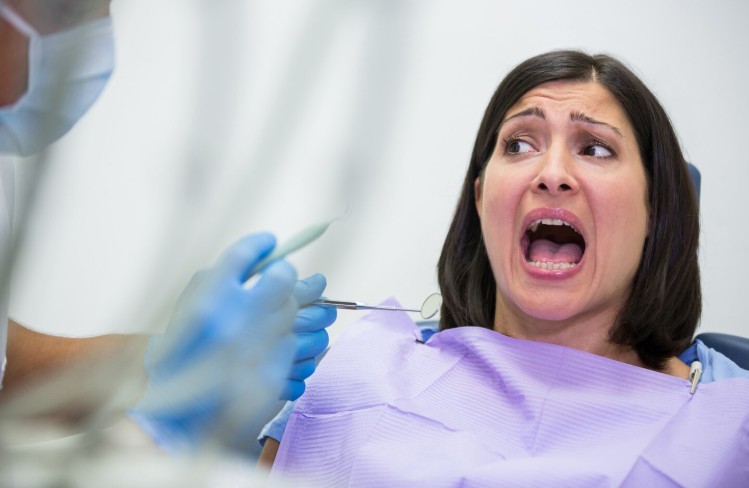
For most people it traces back to a loss of control. You are lying back, you cannot see what is happening, you cannot talk, and someone is working in the most sensitive part of your body. Add a bad past experience and your brain files the whole thing under threat. After that, even booking the appointment trips the alarm.
None of that is a character flaw. It is a normal nervous system doing its job. The trick is not to white-knuckle through it. It is to change the situation so the alarm has less to react to.
You are not the only one
If it helps to hear it: dental fear is common. Surveys put it at somewhere around a third of adults, and a smaller group avoids the dentist altogether because of it, sometimes for years at a stretch. We mention this not to minimise how you feel but the opposite. The patient who has not been in for a decade because they are embarrassed and scared is not a rare case to us. It is a Tuesday. You will not shock us, and you will not be judged for the state of your teeth or the length of the gap. We have genuinely seen it all, and we got into this to help the people most offices make feel worse.
What we changed about the visit
A few specific things, because vague reassurance does not help anyone.
We go at your pace, and we tell you what is happening before we do it, not during. Surprise is half the fear. We numb thoroughly and we wait for it to fully work before we start. Sharp pain is not something you are expected to tough out here. If you feel it, we stop.
There is a comfort menu too: weighted blankets, noise-cancelling headphones, Netflix on the ceiling, pillows. Small things on their own. Together they give your body something other than the chair to focus on.
The stop signal
This one matters more than all the gadgets. You get a hand signal. Raise your hand and we stop, every time, no questions, no “let me just finish this bit.” Knowing you can stop the appointment whenever you want hands back the control the fear took. Most patients who have it never need to use it. Having it is the point.
What you can take for dental anxiety
This is one of the most common things people search, and the honest answer is that it depends, and it should be a conversation rather than a guess.
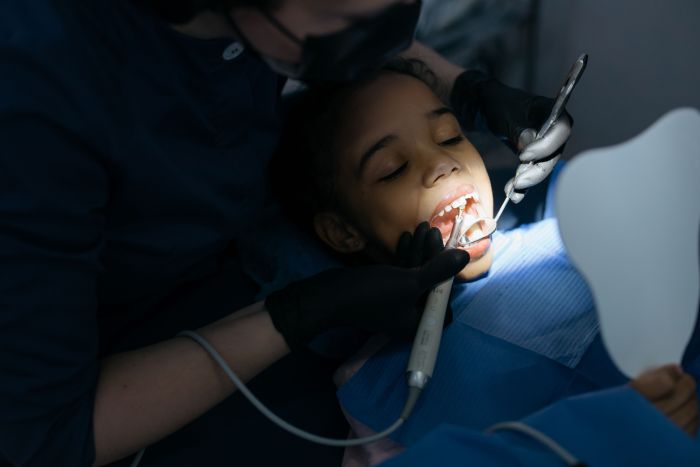
The mildest option is nitrous oxide, laughing gas. You breathe it through a small mask, it takes the edge off within a couple of minutes, and it wears off almost as fast, so you can drive yourself home afterward. Most anxious patients are completely fine with nothing more than this.
For deeper anxiety there is oral sedation, a prescribed tablet you take before the visit that leaves you relaxed and a little drowsy. That one we discuss and prescribe based on your health and history, and you will need someone to drive you. What we do not recommend is self-medicating or turning up having taken something on your own, because it can interact badly with what we use. Tell us how you are feeling and we will find the right level together.
What you can do before the appointment
A few things genuinely help, and you can start them before you ever sit in the chair.
Book a morning slot. Dread compounds all day, so an early appointment gives the anxiety less time to build. Tell us you are nervous when you book. It is not a confession, it is useful information, and it changes how we run the visit from the front desk onward. Bring someone, or bring headphones with your own music, so your brain has an anchor. And skip the coffee that morning, because caffeine and an already-jittery nervous system are a bad pair.
Specific fears, specific fixes
Some fears are not general. They are about one thing, and they are worth naming.
Needles: you will not see them. We use a topical numbing gel first so the injection itself is barely there, and we keep the needle out of your sightline. Most patients say the part they dreaded most was the part they did not even feel.
Gagging: a strong gag reflex is real, and we work around it with positioning, smaller instruments, and nitrous, which settles the reflex along with the nerves.
The drill sound: headphones and your own playlist cover most of it. The sound is usually scarier than the sensation.
The cost conversation: for a lot of people the anxiety is not the chair at all, it is the bill. We talk money plainly and up front, and we have a membership plan and payment options, so the fear of a surprise invoice is off the table.
You can start small
You do not have to book the big treatment first. A lot of our most anxious patients start with a consultation where nothing happens except a conversation. No instruments, no exam if you are not ready. Just a chance to meet us, see the room, and decide for yourself.
From there, a cleaning. Then whatever is next, at your speed. The point is to break the link between this office and the fear, and that happens one easy visit at a time.
What happens if you keep putting it off
We will not lecture you, but we will be straight. Dental problems do not pause while you work up the courage. A small cavity that needed a filling becomes a root canal. A bit of gum inflammation becomes the kind that loosens teeth. The longer the gap, the bigger the eventual visit, which feeds the fear, which stretches the gap out further. It is a loop. The only way out is one appointment that goes better than you expected, and that is the one we are good at.
The thing nobody tells you
The anticipation is almost always worse than the appointment. We hear it constantly: that was nothing like I expected. The treatment you have been dreading for months is usually over in a single visit, and the relief on the other side is real. The fear is loud. It is also, most of the time, wrong about what is actually going to happen.
If you have been avoiding the dentist in Mint Hill because of dental anxiety, start with a phone call. Tell us where you are at. We will take it from there, at whatever pace you need. Call (704) 323-7577 or book a no-pressure consultation.